Steam Heat & Radiator Repair in Hunts Point, Bronx
Eliminate violent pipe knocking, balance cold radiators, replace corroded air vents, and stop leaking valve stems across Hunts Point and Longwood residential buildings.
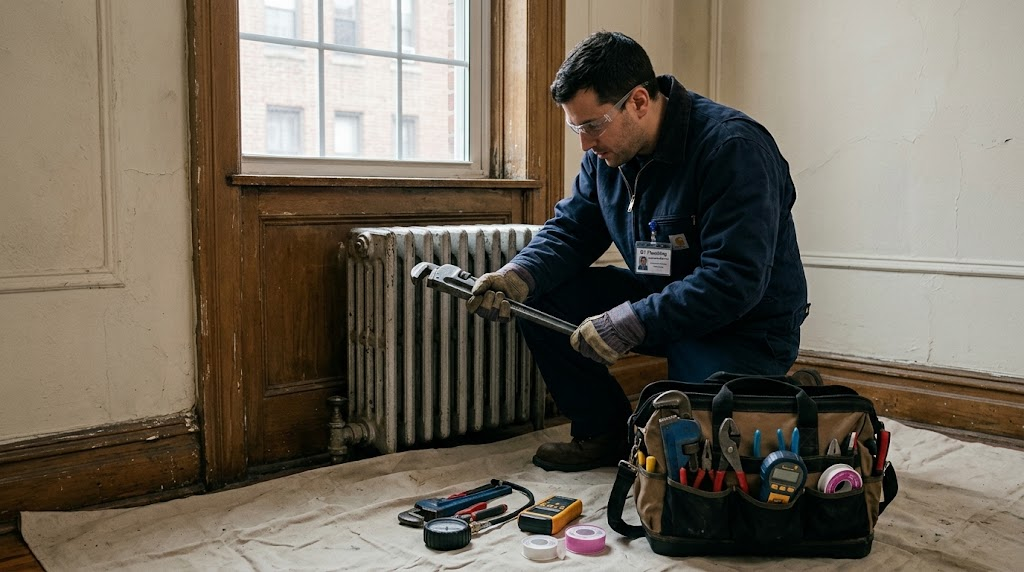
Diagnosing Steam Heat & Radiator Failures
In Hunts Point pre-war brick multi-family homes, brownstones, and apartment walk-ups along Randall Avenue and Coster Street, steam heating systems represent the thermal backbone of the building. However, steam requires delicate hydraulic balance. If air cannot escape or condensate cannot return, radiators stop heating and pipes hammer violently.
Call for certified radiator repair Hunts Point Bronx when encountering:
- Cold Radiator While Boiler Fired: The central boiler is actively firing steam, yet specific radiators remain stone cold due to a stuck air vent.
- Banging Steam Pipes Hunts Point Bronx: Severe metallic hammering and pipe knocking echoing through walls as steam collides with trapped water.
- Hissing & Spitting Vents: Air vents spraying dirty rusty water or continuous steam onto hardwood floors and baseboards.
- Steam Radiator Valve Replacement Hunts Point Bronx: Shutoff valve stems dripping water around the packing gland or frozen solid in half-open positions.
- Uneven Heat Balance: First-floor apartments sweltering at 80°F while top-floor corner units shiver at 62°F.
The Mechanics of Water Hammer (Banging Pipes)
Many residents assume banging pipes are simply a normal part of living in an older Bronx building. In reality, water hammer is destructive. When cooled condensate pools in a pipe or radiator, high-velocity steam creates a localized vacuum that slams the slug of water into fittings at highway speeds. Left uncorrected, water hammer can fracture cast-iron elbows and loosen valve fittings.
Single-Pipe vs. Two-Pipe Steam Care
Heating diagnosis depends on your pipe architecture:
- Single-Pipe Steam: Steam ascends and condensate returns through the exact same pipe. Radiators must pitch toward the supply valve, and air vents must close tightly once steam reaches them.
- Two-Pipe Steam: Steam enters one side and condensate exits through a steam trap on the opposite side. Thermostatic steam traps must be tested to ensure they do not blow live steam into dry returns.
- Main Line Quick Vents: Ensuring large-capacity air vents in the basement release air rapidly so steam distributes evenly to upper floors.
Checking Radiator Pitch Safely
Take a small bubble level and set it on top of your radiator. The bubble should show a slight downward slope toward the large valve end where the pipe enters the floor. If the radiator tilts away from the valve, placing a sturdy wooden shim beneath the far feet will help trapped water drain back to the boiler.
Steam & Radiator FAQs
In a steam system, a cold radiator is usually caused by a clogged or stuck air vent that prevents air from escaping. Since steam cannot enter until air exits, the radiator stays cold. Other common culprits include a closed supply shutoff valve or an unpitched radiator that holds trapped condensate.
Banging steam pipes occur when high-velocity steam collides with pockets of cooled liquid condensate trapped inside pipe low spots or unpitched radiators. The steam instantly condenses into a vacuum, causing water to smash violently against iron pipe fittings.
In steam systems, packing nut leaks around the valve handle stem can often be repaired between heating cycles by repacking the gland with graphite or PTFE valve packing. However, if the brass valve body or seat has corroded through, full valve replacement is required.
In single-pipe steam systems, steam enters and condensate exits through the exact same pipe. Radiators must pitch slightly downward toward the supply valve (approximately 1/4 inch per foot) so cooled water drains freely by gravity without pooling and blocking incoming steam.