Leak Detection in Hunts Point, Bronx
Pinpoint hidden pipe leaks behind walls, between apartment floors, and under concrete slabs without unnecessary demolition across Hunts Point and Longwood properties.
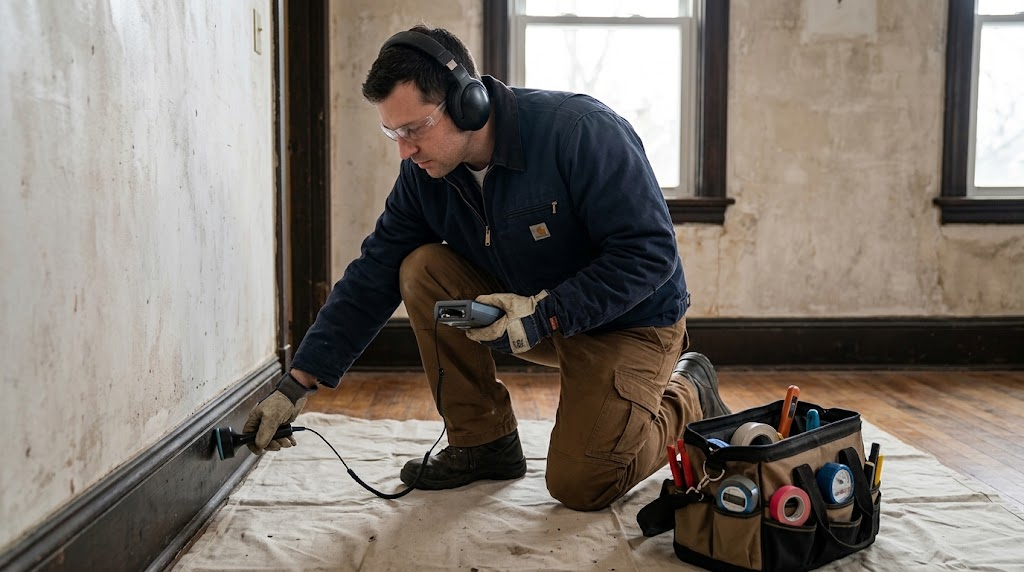
Locating Hidden Plumbing Leaks in Older Bronx Buildings
In Hunts Point multi-family homes, brownstones, and apartment walk-ups along Bruckner Boulevard, plumbing supply risers and waste stacks run concealed within shared plaster chases and beneath subfloors. When water begins dripping through a living room ceiling or dark moisture stains creep up hallway drywall, finding the true leak source without tearing open entire walls is paramount.
Call for certified leak detection Hunts Point Bronx when encountering:
- Ceiling Leak Repair Hunts Point Bronx: Brown water rings spreading on living room or bedroom ceilings beneath upstairs bathrooms.
- Water Leak from Upstairs Apartment Hunts Point Bronx: Dripping water pooling around light fixtures or bathroom exhaust fans during shower use.
- Leak in Wall Detection Hunts Point Bronx: Musty mildew smells, blistered paint, or warped baseboard trim along shared bathroom wet walls.
- Hidden Water Leak Detection Hunts Point Bronx: The DEP municipal water meter spinning continuously even when all faucets and appliances are shut off.
- Apartment Leak Detection Hunts Point Bronx: Resolving contentious leak responsibility disputes between tenant units or condo owners with objective diagnostics.
Non-Invasive Diagnostic Technology
We utilize advanced electronic tools to track water migration back to its origin:
- Thermal Infrared Cameras: Visualizing temperature differentials behind walls to map out hidden moisture plumes and cooling water paths.
- Acoustic Listening Microphones: Amplifying the distinct ultrasonic hiss of pressurized water escaping from pinhole copper fissures.
- Calibrated Moisture Meters: Measuring deep structural dampness in subflooring, wall studs, and ceiling joists to confirm active saturation.
Supply Leaks vs. Drainage & Fixture Leaks
Different leak behaviors indicate different piping origins:
- Pressurized Supply Leaks: Continuous 24/7 drip that never stops, caused by failed copper solder joints, pinholes, or brass valve packing.
- Drain Stack Leaks: Water only appears when an upstairs fixture is actively draining, suggesting cracked cast-iron hub joints or rusted galvanized waste branches.
- Fixture Seal Leaks: Leaking wax rings beneath toilets, defective tub waste-and-overflow assemblies, or uncaulked shower pans.
Immediate Leak Mitigation Step
If ceiling sheetrock is sagging into a heavy water-filled blister, place a large bucket beneath the low point and puncture the center of the bubble with a screwdriver. This safely relieves water weight and prevents a sudden catastrophic plaster ceiling collapse.
Leak Detection FAQs
Non-invasive electronic acoustic listening discs and FLIR infrared thermal imaging allow technicians to narrow down a hidden leak to a precise, localized square foot of sheetrock or plaster. While non-invasive tools locate the leak origin, making a surgical access incision is ultimately necessary to expose the physical pipe fitting and execute the mechanical repair.
Pressurized water supply pipe leaks create constant, uninterrupted moisture that drips 24 hours a day regardless of whether fixtures are in use. Drainage and shower pan leaks appear intermittently, producing wet spots beneath the ceiling only when someone showers, drains a bathtub, or flushes an upstairs toilet.
Immediately alert the upstairs tenant to cease using running water, notify the building landlord or superintendent, place a bucket beneath the drip, and poke a tiny hole in the center of sagging drywall bubbles to prevent heavy ceiling plaster collapse.
Over decades of exposure to municipal water chemistry, galvanized steel pipes corrode from the inside out, creating microscopic pinholes behind walls. Copper lines can develop pinholes due to localized turbulence corrosion near unreamed pipe fittings or electrolysis when in contact with dissimilar metals.