Gas Line Repair & Inspection in Hunts Point, Bronx
Certified natural gas piping inspections, pressure decay testing, leak isolation, and appliance hookups. We ensure fuel gas safety across Hunts Point and Longwood residences.
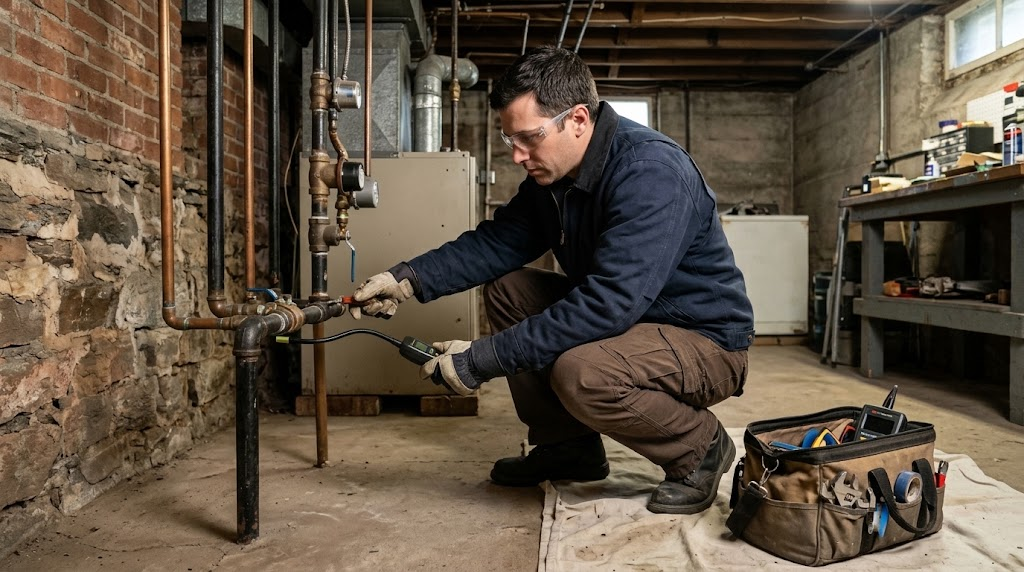
Emergency Gas Leak Protocol
If you smell natural gas odor anywhere in your building, evacuate immediately. Do not touch electrical wall switches, do not use phones indoors, do not ring doorbells, and do not light matches. Call 911 and the Con Edison emergency gas line from outside at a safe distance. Never attempt to locate a gas leak yourself.
Professional Gas Piping Repair & Safety Testing
Natural gas powers boilers, domestic water heaters, commercial laundries, and kitchen stoves across Hunts Point. In older properties near Randall Avenue and Spofford Avenue, original black iron threaded gas lines can develop micro-fractures in pipe joints, corrode in damp cellar environments, or fail following mechanical vibrations.
Our technicians provide code-compliant gas line repair Hunts Point Bronx:
- Combustion Gas Sniffer Diagnostics: Pinpointing low-level fuel leaks using intrinsically safe optical electronic detectors sensitive to parts-per-million concentrations.
- Manometer Pressure Decay Testing: Pressurizing isolated piping sections with clean air to verify the manifold holds airtight pressure over mandated inspection durations.
- Con Edison Meter Re-Connection: If the utility has locked your gas meter due to a violation, we locate the defect, repair the piping under DOB permits, and file the required certification for gas restoration.
- Black Iron Pipe Threading: Replacing deteriorated, pitted gas pipe sections with new schedule-40 black steel pipe, malleable iron fittings, and certified gas pipe dope.
Appliance Line Installations
Planning a kitchen renovation or converting to a chef's gas range? We provide certified gas line installation for stove Hunts Point Bronx, running appropriately sized supply headers, installing dedicated emergency quarter-turn shutoffs, and testing flexible stainless steel connectors to guarantee leak-free operation.
Gas Piping Inspection & Compliance
Our comprehensive gas piping inspection Hunts Point Bronx protocols ensure your property is protected:
- Pipe Joint Verification: Inspecting every exposed union, tee, elbow, and valve from the utility meter to appliance burner controls.
- Sediment Traps (Drip Legs): Confirming proper vertical drip legs are installed upstream of all heating boilers and water heaters to catch scale before it enters gas valves.
- Dedicated Appliance Shutoffs: Ensuring every gas appliance features a readily accessible shutoff valve within six feet of the equipment in the same room.
- NYC Local Law 152 Guidance: Providing certified periodic gas piping inspections and DOB GPS-1 / GPS-2 filing assistance for covered multi-family buildings.
Routine Gas Safety Measures
Never store paint cans, solvent rags, gasoline, or combustible items within 3 feet of your gas boiler or water heater. Ensure furnace rooms have unobstructed combustion air louvers so fuel burners receive ample oxygen for clean, carbon-monoxide-free combustion.
Gas Line FAQs
Evacuate everyone from the building immediately. Do not flip light switches, do not use elevators or phones indoors, do not ring doorbells, and do not ignite flames or start engines. Once outside at a safe distance, call 911 and the Con Edison gas emergency hotline at 1-800-75-CONED.
An electronic combustible gas detector sniffs ambient air around pipe joints and fittings to locate micro-leaks in real time. A pressure decay test involves isolating the gas piping system, pressurizing it with air or inert gas, and monitoring a calibrated pressure gauge over a specified duration to certify the piping is 100% airtight without dropping pressure.
NYC Local Law 152 mandates periodic gas piping inspections for all buildings except standalone one- and two-family private homes (R-3 occupancy group). In Bronx Community District 2 (which includes Hunts Point and Longwood), covered multi-family buildings and commercial spaces must be inspected by a Licensed Master Plumber on a mandatory multi-year cycle.
No. Under the NYC Fuel Gas Code, all interior gas line installations, extensions, and appliance connections must be executed under work permits pulled by a Licensed Master Plumber and pass rigorous pressure testing before gas can be energized.